


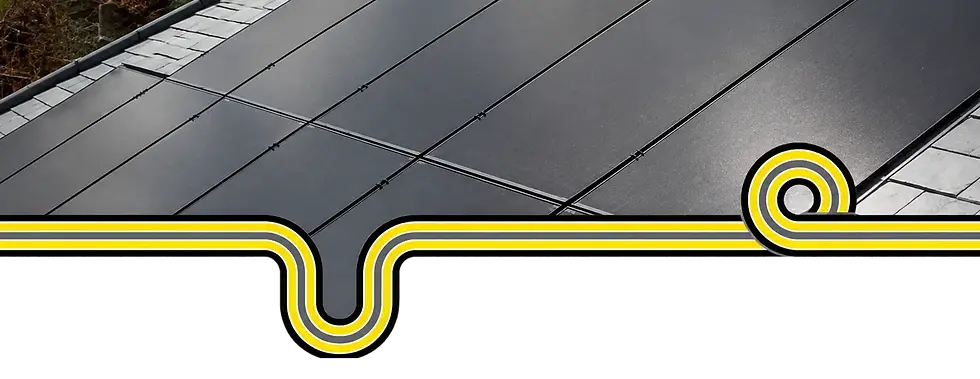


Solar roofing allows you to generate your own clean electricity directly from your home. When it’s well designed, it becomes part of the building itself, working with the structure, weatherproofing and electrics to deliver reliable energy, lower bills and a tidy appearance.
Here, we take a look at how a solar roof can be designed as an integrated system, how to tell if your roof is suitable, and how to get the most from your home now and in the future.


Treating Solar As Part Of The Roof
Solar works best when it’s designed as part of the roof, not added as an afterthought. An integrated approach considers the roof structure, waterproof layers and electrical routes together, so everything works as one system.
When solar is planned alongside roofing works, fixings can be coordinated with the structure, membranes can be detailed properly, and cables can be routed neatly within the building. This reduces the risk of leaks, avoids visible trunking and gives a much cleaner finish.
Whether you’re re-roofing or building an extension, designing solar in from the start helps the system last longer and perform better. It also makes maintenance simpler, as components are accessible and well documented.
Lowering Your Energy Bills
One of the biggest reasons to choose solar roofing is the impact it can have on your energy costs. By generating electricity on site, you rely less on the grid and buy less power at rising market prices.
The electricity you generate can be used to run everyday appliances, lighting and heating systems. Any surplus can be exported back to the grid, depending on your tariff. Over time, this can significantly reduce your annual bills and provide some protection against future price increases.
Solar also works well with the modern way of living. Most energy will be generated during the day, allowing you to power your home office and electrical devices using clean, free energy.
Is Your Roof Suitable For Solar?
Not every roof is the same, and a proper assessment is essential before deciding on solar. Several factors affect how efficient a system will be.
Orientation is important, as roofs facing south, south-east or south-west tend to produce the most energy. Roof pitch also matters, as very shallow or very steep angles can reduce output. Shading from nearby trees, buildings or chimneys needs to be assessed carefully, as even partial shade can affect performance.
The condition of your roof is equally important. Installing solar on a roof that is near the end of its life can lead to extra cost and disruption later on. Checking the structure, coverings and fixings ensures the roof can support the system safely.
A thorough suitability check gives you clear answers about what’s possible and what level of performance you can expect.

Keeping Solar Discreet
Many homeowners worry about how solar panels will look. With careful design, solar roofing can sit comfortably on a wide range of buildings, from period homes to modern extensions.
Panel layouts can be planned to align with roof lines, windows and edges, creating a balanced appearance. Low-profile systems and integrated products can reduce visual impact, especially on prominent elevations. On some roofs, panels can replace traditional tiles or slates in selected areas, creating a more seamless look.
For heritage properties or sensitive settings, design choices become even more important. Thoughtful positioning and product selection can help solar sit quietly in the background, rather than standing out.
Getting More From Smart Combinations
Solar delivers the greatest benefits when it’s combined with other improvements. Increasing levels of insulation and airtightness reduces heat loss, meaning the energy you generate goes further. Pairing solar with efficient heating systems, such as heat pumps, allows more of your electricity to be used on site rather than exported. Adding smart controls helps you match energy use to generation.
By looking at your home as a whole system, you can maximise savings, reduce carbon emissions and improve comfort at the same time.
Help With Permissions And Incentives
Solar roofing can involve planning considerations, especially if your home is listed or in a conservation area. Understanding these requirements early helps avoid delays and unexpected costs.
Clear advice on what is likely to be permitted, and how designs can be adjusted to meet planning constraints, makes the process smoother. In many cases, solar can be installed under permitted development, but each situation is different.
There are also financial considerations to factor in. Zero VAT on residential solar installations, and export tariffs for surplus electricity, can improve the overall return on investment. Support with permissions and incentives removes uncertainty and gives you confidence to move forward.
A Practical Step Towards Clean Energy
Solar roofing is a practical and proven way to generate clean energy at home. When it’s well designed, it integrates neatly with your roof, reduces energy bills and supports a lower-carbon lifestyle.
By starting with a careful assessment and taking an integrated, design-led approach, you can be confident that solar will work efficiently and look right on your home. Whether as part of a wider upgrade or as a standalone project, solar roofing is a step towards greater energy independence and long-term resilience.
Get in touch with a member of our team to learn more about the services we offer and to find out how we can help with your solar roofing project.

Is Your Roof Ready to Protect Your Home?
Your roof is more than just a cover; it’s your home's first line of defense against the elements. But is it performing at its best? From leaks to poor energy efficiency, an underperforming roof can cost you more than you think
Our free downloadable "Top Tips: Your Roof" guide is packed with essential information to help you understand your roof's vital role. You’ll learn how to spot signs of damage , when to consider an overhaul , and the benefits of solar panels for your energy bills and carbon footprint.